Giant octopus discovery could change understanding of ocean evolution, revealing new insights into deep-sea life, adaptation, and marine history.
A discovery that is bigger than just big
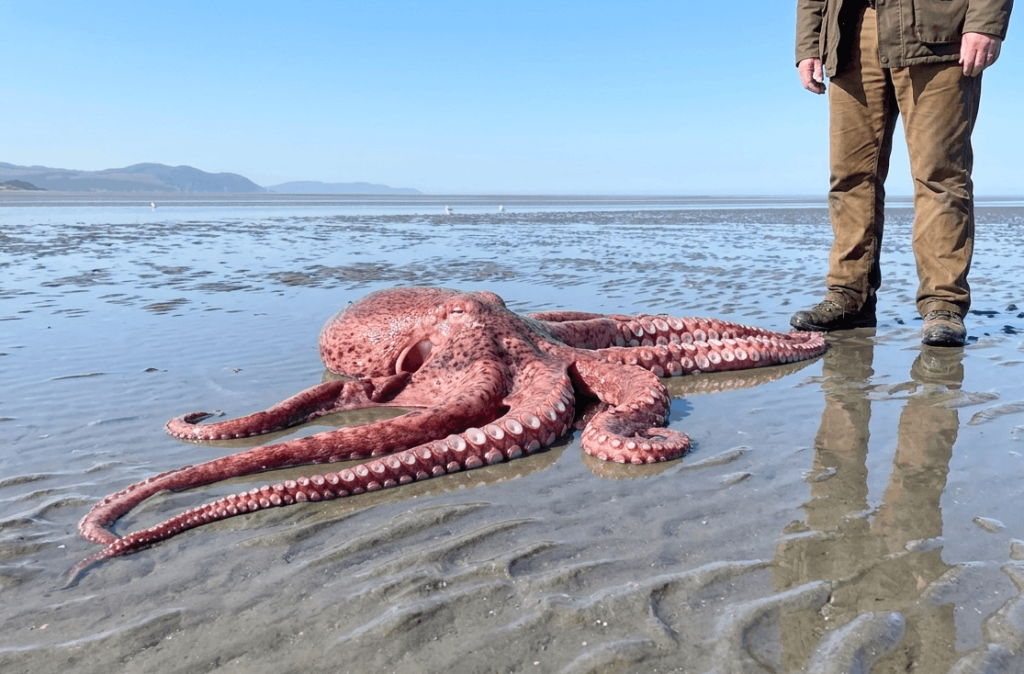
Scientists recently revealed evidence of an ancient giant octopus that may have grown up to bus-sized proportions. At first glance, it sounds like just another prehistoric discovery — but in reality, it challenges long-standing ideas about how intelligent and powerful ancient marine life may have been.
Fossil evidence studied by researchers and published through scientific academic channels such as Science suggests that these creatures lived millions of years ago and may have been far more advanced predators than previously believed.
But the real question is not what was discovered — it is what this changes about what we thought we knew.
Not just a monster a misunderstood predator
For decades, octopuses were seen as:
- Smart but small
- Solitary and fragile
- Limited to modern ocean ecosystems
This discovery challenges that completely.
If giant octopus species truly existed at that scale, it suggests:
- Deep-sea ecosystems were far more competitive
- Intelligence in marine life evolved earlier than expected
- Predator-prey balance in ancient oceans was radically different
In other words, the ocean was not just filled with large reptiles — it may have also been ruled by intelligent invertebrate giants.
Why size changes everything in evolution
In biology, size is not just a physical trait it changes behavior, intelligence demands, and survival strategy.
A giant octopus would likely require:
- Advanced hunting strategies
- Strong camouflage adaptation
- High environmental awareness
This pushes scientists to rethink how octopus intelligence evolved. Today’s octopuses are already known for problem-solving skills, escape behavior, and tool-like actions. Scaling that intelligence to a much larger body changes the entire evolutionary picture.
Why this matters today
This discovery is not just about the past — it affects how we understand oceans today.
It raises key questions:
- How many unknown species still exist in deep oceans?
- Could intelligence in marine life be more common than we think?
- Are we underestimating deep-sea ecosystems?
Institutions like Hokkaido University and other marine research groups continue to find evidence that deep ocean biodiversity is still largely unexplored.
What we may have been wrong about
This discovery hints at a bigger scientific idea: We may still be underestimating ancient ocean intelligence.
For years, dinosaurs dominated public imagination as Earth’s ultimate predators. But discoveries like this suggest oceans may have had equally complex and intelligent life forms at the same time — just less visible in the fossil record.