A rare hantavirus related health scare aboard the expedition cruise ship MV Hondius has raised international concern after multiple passengers reportedly became ill during a South Atlantic voyage linked to the Cape Verde region. However, current scientific evidence from the Centers for Disease Control and Prevention (CDC) indicates that widespread human to human transmission remains highly unlikely in most hantavirus cases.
The first reported case involved a 70 year-old Dutch passenger who developed fever-like symptoms while onboard and later died during the voyage. Following the incident, additional passengers reportedly became sick, including a British man who was medically evacuated to South Africa in critical condition. The cases triggered concern among travelers and health authorities about whether the virus could spread within the confined environment of a cruise ship.
According to the CDC, hantaviruses are primarily transmitted to humans through exposure to infected rodents particularly through contact with rodent urine, droppings, or saliva. Inhaling contaminated airborne particles is considered the most common infection route. The agency notes that person-to-person transmission is extremely rare and has mainly been documented with a specific strain known as Andes virus in parts of Argentina and Chile.
That distinction is critical in assessing the situation aboard the MV Hondius. Based on currently available information, there is no public evidence suggesting the outbreak involved the Andes strain or that sustained onboard transmission occurred between passengers. Epidemiologists say the ship’s close-quarter conditions naturally increase concern, but hantavirus does not spread in the same way as airborne respiratory viruses such as COVID-19 or influenza.
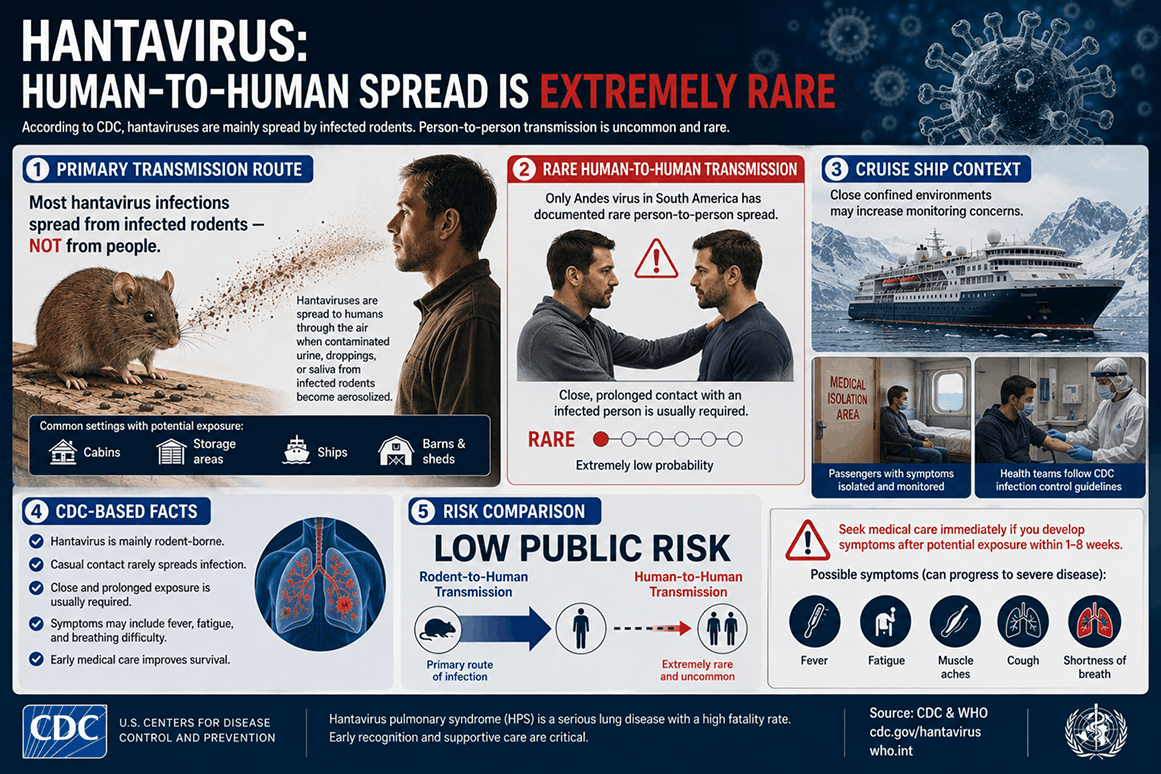
Health experts also inspect that symptoms of hantavirus infection including fever, muscle aches, fatigue, and respiratory distress can resemble several other infectious diseases common in maritime travel. Confirming transmission pathways typically requires laboratory testing and epidemiological tracing.
The incident nevertheless highlights the challenges cruise operators face when dealing with rare infectious diseases far from major medical facilities. Medical evacuation to South Africa demonstrated the seriousness of the situation, but current CDC guidance suggests the overall public transmission risk remains low unless direct rodent exposure occurred.
As investigations continue, public health officials are expected to focus on environmental exposure sources rather than assuming widespread passenger-to-passenger infection aboard the vessel.